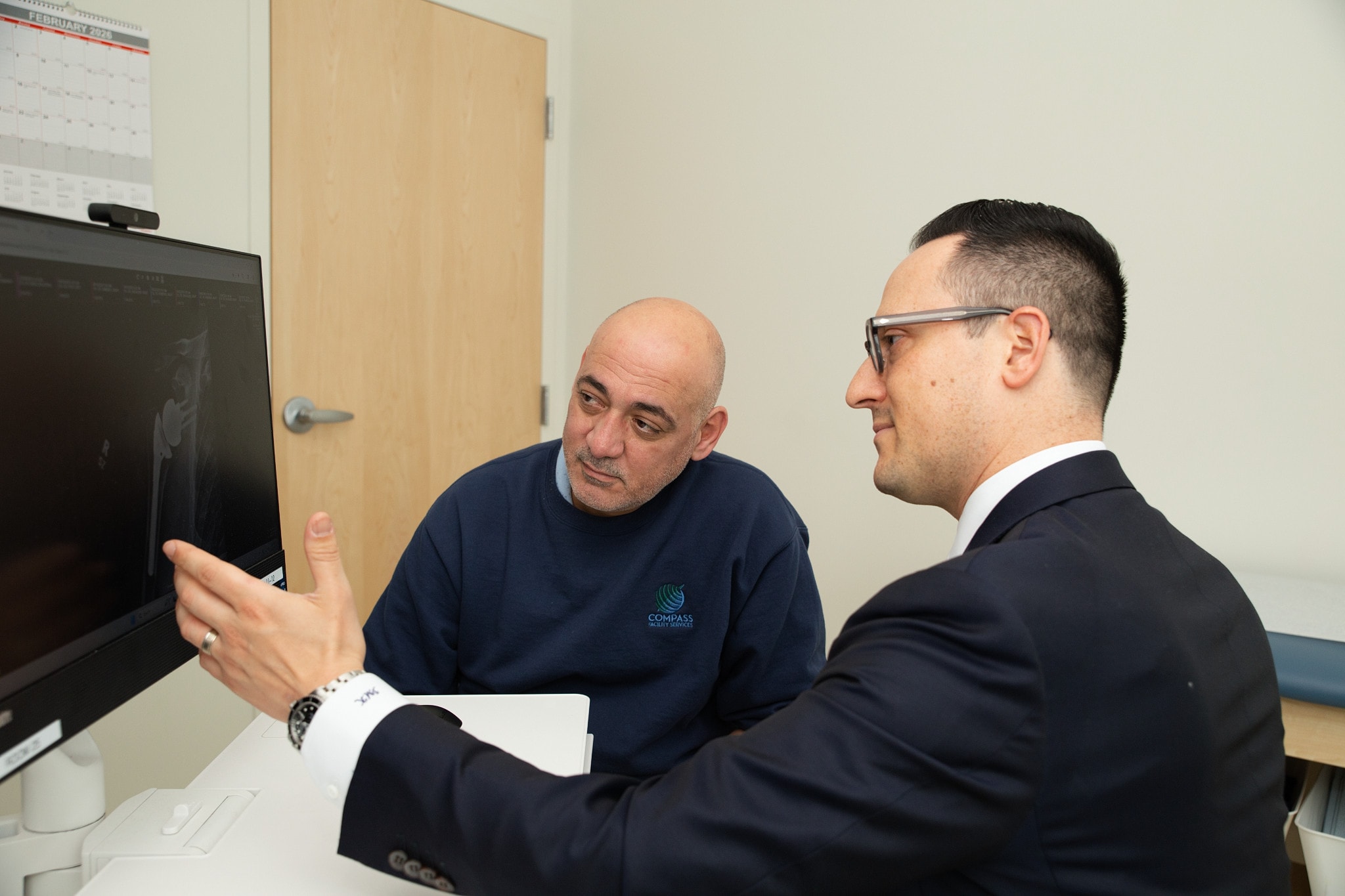
Revision Shoulder Replacement
Overview
Revision shoulder replacement is performed when a previous shoulder arthroplasty (either anatomic or reverse) fails due to complications such as implant loosening, infection, instability, periprosthetic fracture, or progressive rotator cuff dysfunction. This is one of the most complex procedures in shoulder surgery, requiring specialized expertise and careful planning.
Dr. Kirsch is one of only a few surgeons in the Boston and Greater New England region who regularly performs complex revision shoulder surgery. His extensive experience with these challenging cases allows him to achieve the best possible outcomes for patients with failed previous shoulder replacements.
When Is Revision Surgery Needed?
Revision surgery may be necessary for:
- • Implant loosening (wear of the plastic component or bone around the implant)
- • Infection of the shoulder replacement
- • Instability (shoulder dislocation or subluxation)
- • Periprosthetic fracture (bone fracture around the implant)
- • Progressive rotator cuff dysfunction
- • Persistent pain despite appropriate healing
The Surgical Procedure
Revision shoulder replacement is significantly more complex than primary shoulder replacement. The procedure requires careful removal of the old components and meticulous preparation for the new implants.
Surgical Approach
The approach may involve:
- • Single-stage procedure: Old components removed and replaced in one operation (most common)
- • Two-stage procedure: Used in cases of infection, involving removal of the implant, placement of a temporary spacer, and reimplantation at a later date
Complex Reconstruction
Sometimes, this complex procedure involves replacing missing areas of bone with bone from a cadaver (allograft) or doing tendon transfers to stabilize the shoulder and optimize function. Each revision is highly individualized based on the specific reason for failure and the condition of the remaining bone and soft tissues.
Important Considerations
In general, revision shoulder replacements are more complex and have higher risks of complications compared to primary procedures. However, when well-planned and performed by an experienced surgeon, many patients still experience meaningful pain relief and functional improvement.
Recovery Timeline
Recovery from revision shoulder replacement is typically longer than primary replacement. Patients may take a full year or more to reach their full potential.
Immobilization is very important after a revision procedure to help protect the shoulder and the reconstruction.
- • Patients are in a sling for 6 weeks (longer than primary replacement)
- • Can move hand, wrist, and elbow immediately
- • Must stay "in the box" (no rotation, reaching behind back, or pushing up)
- • Physician-directed exercises begin at 6 weeks
Focus on improving range of motion through physician-directed, patient-led exercises. You don't ever have to do formal physical therapy! Progress is gradual - it's important not to go too fast too soon.
After a revision shoulder replacement, patients often take longer to improve their function compared to a primary procedure. Continue to work on stretching exercises. Be patient with your progress.
Patients may start resuming more normal activities if they are able at this point. Following revision shoulder replacement, patients may be more limited with their motion or strength compared to a primary procedure. However, in most instances by this point patients have significantly improved pain compared to before surgery.
Expected Outcomes
Realistic Expectations
Outcomes of revision shoulder replacement are generally less favorable than primary procedures, with:
- • Reduced range of motion compared to primary replacement
- • Higher complication rates
- • Longer recovery time
- • Greater chance of needing additional surgery
Positive Outcomes
Despite the challenges, many patients still experience meaningful pain relief and functional improvement, particularly when the revision is well-planned and tailored to the specific cause of failure. Dr. Kirsch will have a very individualized discussion with you regarding your specific risk factors and what can be done to optimize the chances of having the most successful outcome possible.
Related Information
Learn about primary anatomic total shoulder replacement for patients with arthritis.
Anatomic ReplacementLearn about primary reverse shoulder replacement for rotator cuff tear arthropathy.
Reverse ReplacementImportant information about pre-operative testing, medications, home preparation, and what to bring to the hospital.
Pre-Surgery GuideDetailed information about anesthesia, nerve blocks, recovery room procedures, and hospital discharge.
After SurgeryQuestions About Revision Shoulder Replacement?
Schedule a consultation with Dr. Kirsch to discuss whether this procedure is right for you
Contact Us