Anatomic Total Shoulder Replacement
Overview
Anatomic total shoulder replacement maintains the natural anatomy of your shoulder. A metal ball replaces the end of the upper arm bone (humerus) and a plastic cup replaces the socket (glenoid). This procedure is designed for patients with shoulder arthritis who have an intact rotator cuff.
Overall, anatomic total shoulder replacements are performed less commonly in the United States and internationally compared to reverse shoulder replacements. However, in certain patients this can still be a very effective type of shoulder replacement, providing excellent pain relief and restoration of function.
Who Is a Candidate?
Anatomic total shoulder replacement is best suited for patients with:
- • Shoulder arthritis (osteoarthritis or inflammatory arthritis)
- • Intact or reparable rotator cuff tendons
- • Good bone quality in the glenoid (socket)
- • Adequate soft tissue integrity
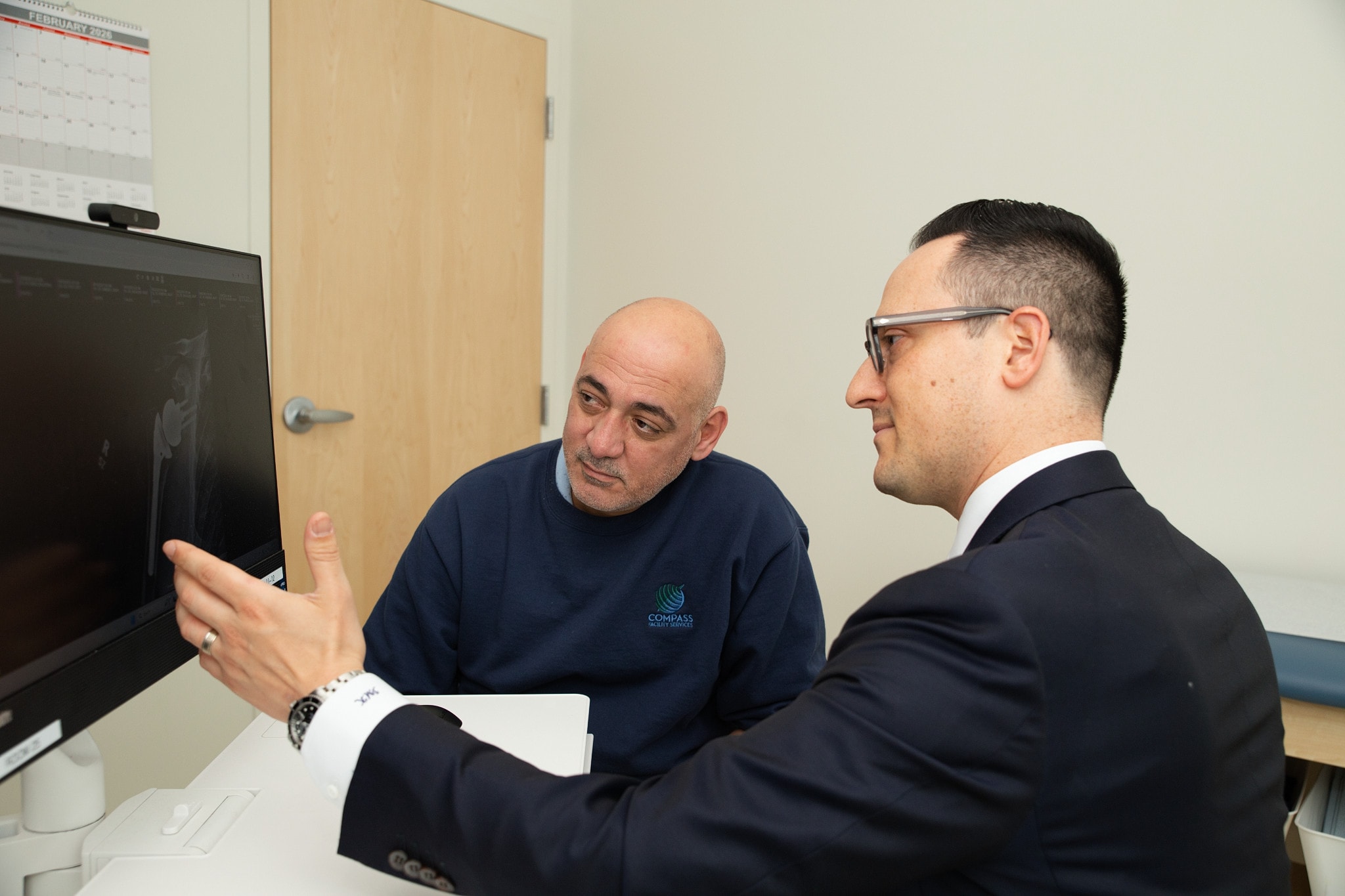
The main determining factors include the quality and strength of the bone in the glenoid, and the quality of your soft tissues and rotator cuff tendons. Dr. Kirsch will thoroughly evaluate your condition using physical examination and advanced imaging to determine which type of shoulder replacement is best for you.
The Surgical Procedure
Anatomic total shoulder replacement is performed through an incision on the front of the shoulder. The procedure involves preparing the bone surfaces and implanting the prosthetic components with precision.
Subscapularis Repair
A critical aspect of anatomic total shoulder replacement is the subscapularis repair (the front rotator cuff tendon). The repair of the subscapularis is essential for a successful anatomic total shoulder replacement. After surgery, it is crucial to protect this repair by remaining "in the box" - avoiding rotation away from the body, reaching behind your back, or pushing yourself up with the operative arm.
Anesthesia and Pain Management
You will receive a nerve block on the day of surgery to help manage postoperative pain. This numbs the nerves for 18-24 hours, minimizing immediate pain and reducing narcotic requirements. We use a multimodal pain management approach including Tylenol, anti-inflammatory medications, and a low-dose steroid to optimize your comfort.
Recovery Timeline
Recovery from shoulder replacement takes up to a full year, with approximately 90% of progress made by 6 months.
Protect your shoulder, particularly the subscapularis repair. Goals are to control pain and begin basic motion.
- • Arm in sling for comfort and protection
- • Can move hand, wrist, and elbow immediately
- • Must stay "in the box" (no rotation or reaching behind back)
- • Physician-directed exercises begin at 4 weeks
Focus on improving range of motion. All exercises are physician-directed and patient-led - you don't ever have to do formal physical therapy! Motion will improve significantly, but slow and steady wins the race.
Return to certain sporting activities in a graduated fashion:
- • 4 months: Start golf chipping, light tennis ground strokes
- • 5-5.5 months: Full golf swings without hitting ball
- • 6 months: Full unrestricted golf and tennis
- • Continue daily stretching to maximize function
Many patients continue to improve significantly up to one year. Long-term, Dr. Kirsch doesn't put formal restrictions on activity or weightlifting. The best rule of thumb: if you can't lift or do something 20 times, it is likely too much.
What to Expect
Hospital Stay
Patients are typically discharged either the same day or the day after surgery. Most patients prefer to go home the same day. Dr. Kirsch strongly prefers patients to be discharged to their home without the need for a rehab facility.
Sleeping
Many patients have increased shoulder pain lying flat. We recommend sleeping in a recliner or reclined position in bed with wedge pillows. You may place a pillow between your body and arm and behind your elbow for comfort.
Driving
It is never acceptable to drive while taking narcotic pain medications. It is generally not advisable to drive while in your sling. Dr. Kirsch will discuss this in detail during your postoperative visits.
Related Information
Learn more about shoulder arthritis and when shoulder replacement surgery is recommended.
Shoulder ArthritisLearn about the alternative reverse shoulder replacement for patients with rotator cuff deficiency.
Reverse Shoulder ReplacementImportant information about pre-operative testing, medications, home preparation, and what to bring to the hospital.
Pre-Surgery GuideDetailed information about anesthesia, nerve blocks, recovery room procedures, and hospital discharge.
After SurgeryQuestions About Anatomic Shoulder Replacement?
Schedule a consultation with Dr. Kirsch to discuss whether this procedure is right for you
Contact Us