Fracture Treatment
Overview
Shoulder fractures involve broken bones in the shoulder complex, most commonly affecting the proximal humerus (upper arm bone), clavicle (collarbone), or scapula (shoulder blade). Treatment depends on the type, location, and severity of the fracture, as well as the patient's age, activity level, and bone quality.
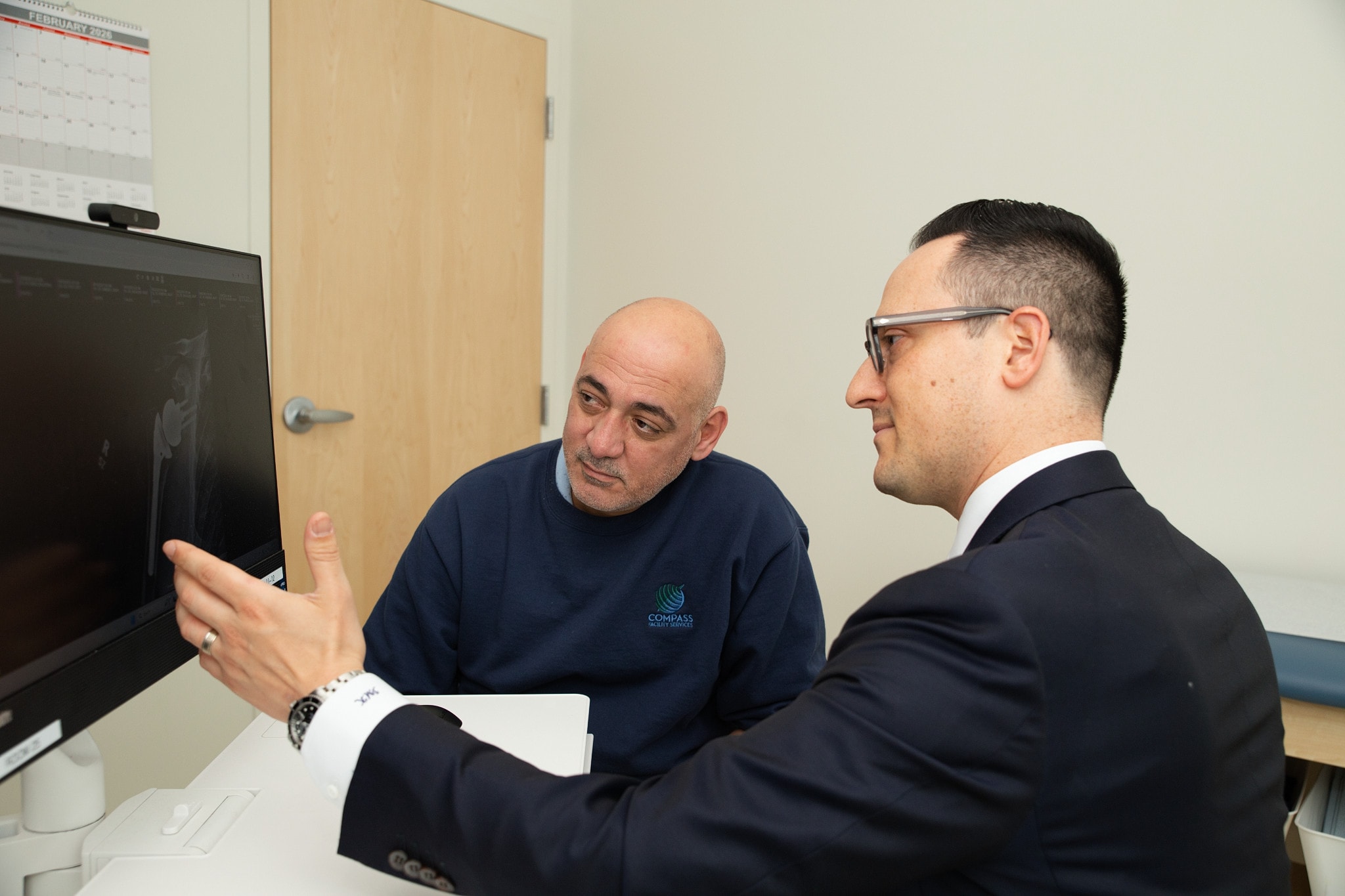
Dr. Kirsch has extensive experience treating all types of shoulder fractures, from simple non-displaced fractures managed conservatively to complex comminuted fractures requiring advanced surgical techniques including fracture fixation or shoulder replacement.
Types of Shoulder Fractures
Proximal Humerus Fractures
Most common shoulder fractures, especially in elderly patients with osteoporosis. These fractures occur at the top of the upper arm bone, near the shoulder joint. They can range from simple cracks to complex multi-part fractures involving the joint surface.
Clavicle Fractures
More common in younger, active individuals from falls or direct trauma. The clavicle (collarbone) connects the shoulder to the chest and is visible just beneath the skin. Fractures typically occur in the middle third of the bone.
Scapula Fractures
Less common and usually result from high-energy trauma such as motor vehicle accidents. The scapula (shoulder blade) is protected by thick muscles, so significant force is required to cause a fracture.
Treatment Options
Treatment is highly individualized based on multiple factors including fracture pattern, displacement, patient age, bone quality, and functional demands.
Conservative (Non-Surgical) Treatment
Many nondisplaced or minimally displaced fractures can be successfully treated without surgery:
- • Immobilization in a sling for comfort and protection
- • Pain management with medications
- • Early gentle range of motion exercises to prevent stiffness
- • Gradual rehabilitation as healing progresses
- • Regular X-rays to monitor healing
Many proximal humerus fractures can heal well without surgery, especially in older patients with lower functional demands.
Surgical Fixation
Displaced or unstable fractures may require surgical stabilization:
- • Plate and screw fixation: Metal plate attached to the bone with screws to hold fragments in proper alignment
- • Intramedullary nailing: Rod placed inside the bone to stabilize the fracture
- • Pin fixation: Pins or wires used to hold bone fragments together
- • Tension band wiring: Specialized technique for certain fracture patterns
The goal is to restore normal anatomy, allow early motion, and achieve solid healing for optimal function.
Shoulder Replacement for Fractures
Complex fractures, especially in older patients, may be best treated with shoulder replacement:
- • Severe comminution (many bone fragments)
- • Fractures involving the joint surface
- • Fractures with disrupted blood supply to the humeral head
- • Osteoporotic bone that won't hold fixation
Reverse shoulder replacement is often preferred for fractures in elderly patients, providing reliable pain relief and functional improvement even when the rotator cuff is damaged.
Recovery
Recovery varies significantly based on the treatment method and fracture severity.
Most fractures heal within 6-12 weeks. Early gentle motion is important to prevent stiffness while protecting the healing bone. Strengthening begins once the fracture has healed, typically around 8-12 weeks. Full recovery may take 4-6 months.
Surgery allows earlier motion since the fracture is stabilized. Physical therapy typically begins 2-4 weeks after surgery. Bone healing takes 8-12 weeks. Return to full activities usually occurs at 4-6 months depending on the fracture pattern and healing.
Recovery follows similar protocols to shoulder replacement for arthritis. Motion begins early, typically within 4-6 weeks. Full recovery takes 6-12 months. Outcomes are generally good for pain relief, though function may be somewhat limited compared to replacement for arthritis.
What to Expect
Choosing the Right Treatment
Dr. Kirsch will thoroughly evaluate your fracture using physical examination and advanced imaging (X-rays, CT scans) to determine the best treatment approach. The decision considers your age, activity level, bone quality, fracture pattern, and overall health.
Importance of Early Motion
Regardless of treatment method, early gentle motion is critical to prevent shoulder stiffness. Physical therapy plays a vital role in achieving optimal outcomes after shoulder fractures.
Outcomes
Most patients achieve good functional outcomes after shoulder fractures with appropriate treatment. Younger patients with simple fractures typically return to full activities. Older patients with complex fractures can achieve excellent pain relief and functional independence for daily activities.
Related Information
Learn more about different types of shoulder fractures, symptoms, and diagnosis.
Shoulder FracturesLearn about reverse shoulder replacement for complex proximal humerus fractures.
Reverse ReplacementImportant information about pre-operative testing, medications, and home preparation.
Pre-Surgery GuideUnderstanding the importance of early motion and rehabilitation after fractures.
PT ProtocolsQuestions About Fracture Treatment?
Schedule a consultation with Dr. Kirsch to discuss the best treatment option for your fracture
Contact Us