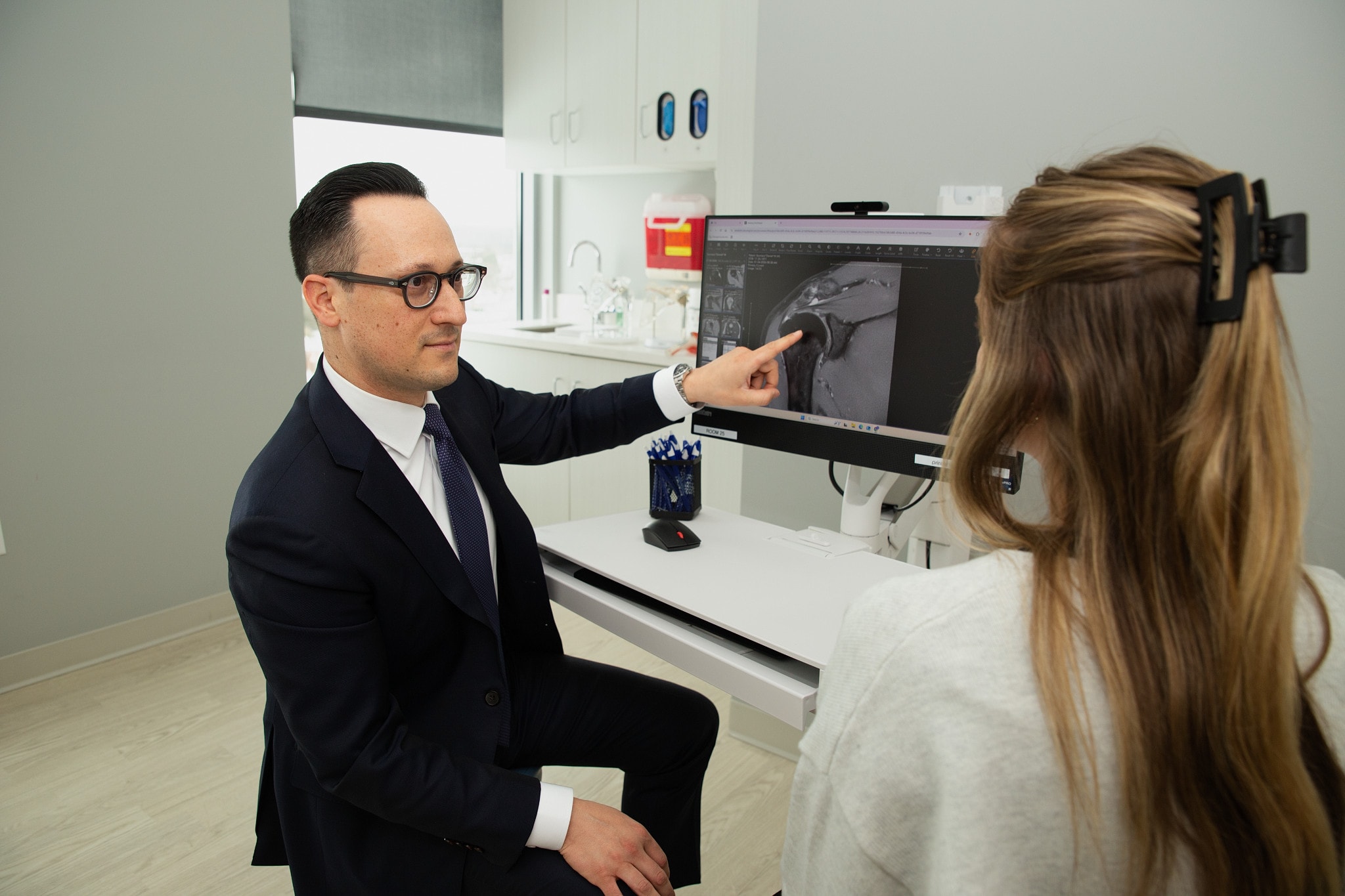
Shoulder Fractures
Background
Trauma to the shoulder can result in a fracture or broken bone. This can involve several bones that make up the shoulder joint, most commonly the proximal humerus, clavicle, and scapula. These fractures often result from trauma such as falls, motor vehicle accidents, or high-impact sports injuries, and are particularly common in older adults with osteoporosis.
Proximal humerus fractures are the most frequently seen shoulder fractures, especially in elderly patients, while clavicle fractures are more common in younger, active individuals. The severity of the fracture can vary from nondisplaced cracks to complex, comminuted, or displaced fractures involving joint surfaces.
Symptoms
Shoulder fractures typically present with:
- • Sudden, severe pain following trauma
- • Swelling and bruising around the affected area
- • Visible deformity or bump over the fracture site
- • Limited range of motion
- • Inability to lift the arm or move the shoulder
- • Occasional numbness or tingling due to nerve involvement
Pain is usually localized to the fracture site depending on the bone involved.
Diagnosis
Diagnosis of shoulder fractures begins with a physical examination to assess for deformity, swelling, neurovascular status, and range of motion. Imaging is essential and typically starts with standard X-rays to identify the location, pattern, and displacement of the fracture.
In complex cases or when joint involvement is suspected, CT scans may be ordered to provide detailed visualization of the bony anatomy and assist in surgical planning.
Treatment Options
Treatment of shoulder fractures depends on several factors:
- • Type, location, and severity of the fracture
- • Patient's age and activity level
- • Bone quality
- • Presence of joint surface involvement
Conservative Treatment
Many nondisplaced or minimally displaced fractures can be managed conservatively with immobilization in a sling, followed by gradual rehabilitation.
Surgical Treatment
Displaced or complex fractures, particularly those involving the joint surface or associated with soft tissue injury, may require surgical intervention. Surgery may involve fixing the fracture in certain instances, or it may involve performing a shoulder replacement in more complex situations.
Related Information
Learn about surgical options for shoulder fractures, including fracture fixation and shoulder replacement procedures.
Fracture TreatmentImportant information about how to prepare for shoulder surgery, including medications and home preparation.
Pre-Surgery GuideQuestions About Shoulder Fractures?
Schedule a consultation with Dr. Kirsch to discuss your diagnosis and treatment options
Contact Us