Shoulder Instability
Background
Shoulder instability occurs when the structures that normally keep the humeral head centered in the glenoid socket are compromised, leading to excessive movement or dislocation of the joint. It is most commonly seen in young, active individuals, particularly athletes involved in contact or overhead sports.
Instability can result from acute trauma (e.g., a shoulder dislocation) or repetitive microtrauma that stretches or tears the ligaments and capsule. It is categorized into anterior, posterior, or multidirectional instability based on the direction of joint displacement, with anterior instability being the most prevalent.
Symptoms
Common symptoms of shoulder instability include:
- • Sensation of the shoulder "slipping," "popping out," or feeling loose
- • Episodes during certain movements or arm positions
- • Acute dislocations with sudden, intense pain and visible deformity
- • Chronic instability with intermittent discomfort and weakness
- • Feeling of apprehension when the arm is in vulnerable positions
- • Nerve symptoms like numbness or tingling from traction on nerves
Diagnosis
Diagnosis involves a detailed patient history, physical examination, and imaging studies. The physical examination is essential to assess the directions and degree of instability as well as generalized hyperlaxity.
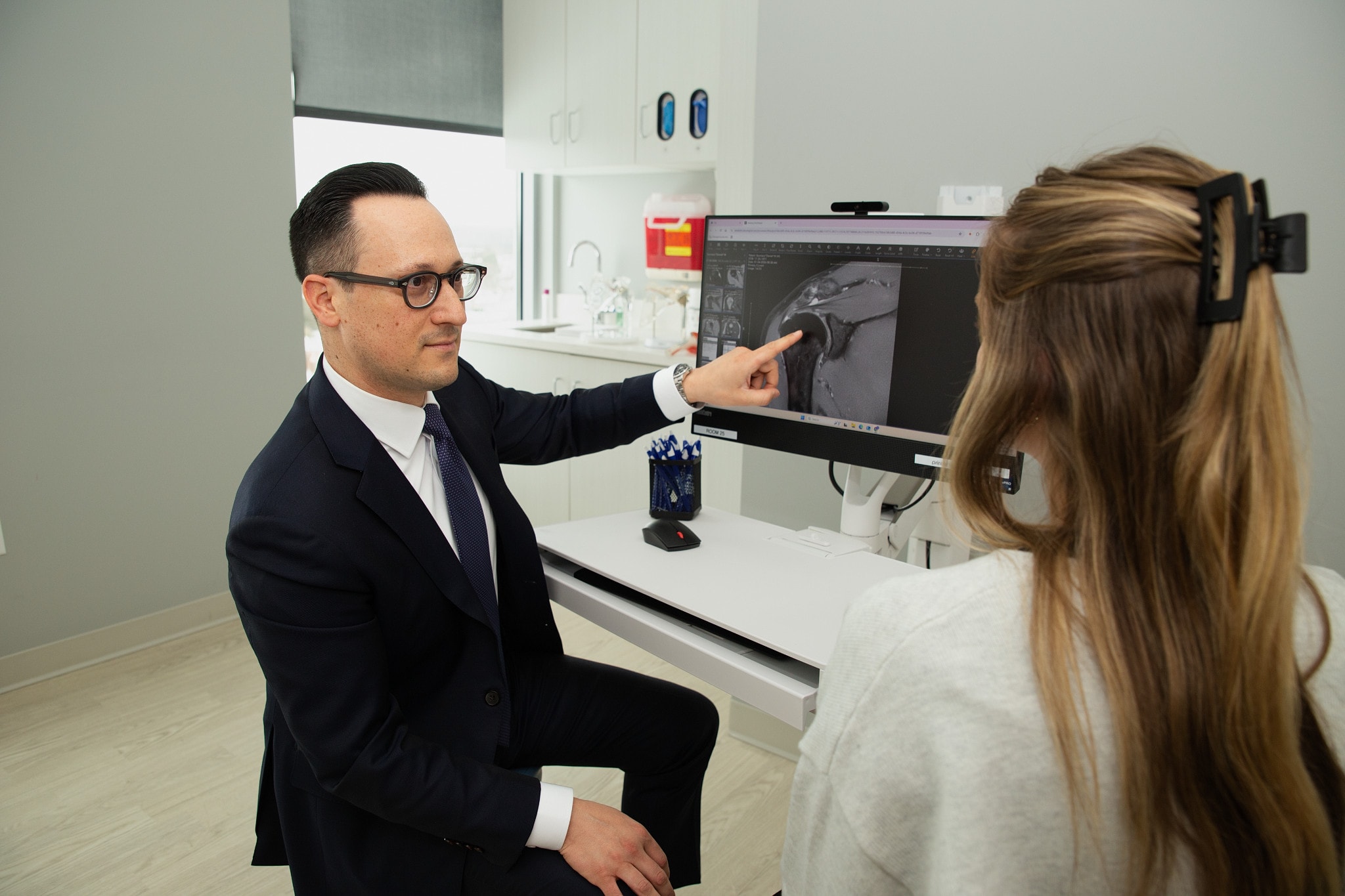
Plain radiographs are part of the standard workup. If surgery is being considered, an MRI or CT scan is needed. MRIs detect soft tissue pathology such as tears of the labrum or ligaments. In cases of recurrent instability, a CT scan is necessary to determine bone loss, as this may dictate a different type of surgical procedure.
Treatment Options
Treatment can be nonoperative or surgical, depending on severity, frequency of dislocations, patient activity level, and underlying structural damage.
Non-Operative Management
Initial management typically includes:
- • Rest
- • Physical therapy to strengthen rotator cuff and scapular stabilizers
- • Activity modification
There is increasing evidence that early surgical intervention is more beneficial compared to non-operative treatment, however, certain patients may still benefit from an initial trial of non-operative care.
Surgical Treatment
Recurrent instability, or first-time events in younger athletes or those at higher risk of recurrent dislocations, often necessitates surgical intervention:
- • Arthroscopic Bankart Repair - Commonly performed for anterior instability
- • Latarjet Procedure - Indicated in cases with significant bone loss
Dr. Kirsch will individualize a treatment plan for you based on your specific pathology and risk factors.
Related Information
Learn about surgical stabilization procedures including arthroscopic Bankart repair and the Latarjet procedure.
Learn MoreQuestions About Shoulder Instability?
Schedule a consultation with Dr. Kirsch to discuss your diagnosis and treatment options
Contact Us