Shoulder Bursitis / Impingement
Background
Bursitis and rotator cuff tendonitis are common causes of shoulder pain, often occurring together due to their anatomical proximity and shared mechanisms of injury. Subacromial bursitis involves inflammation of the bursa that cushions the rotator cuff tendons beneath the acromion, while rotator cuff tendonitis refers to inflammation or degeneration of the rotator cuff tendons, usually from overuse, repetitive overhead activity, or age-related wear.
These conditions are prevalent in both athletes and older adults and can result from acute injury or chronic impingement of the tendons and bursa.
Symptoms
Patients with bursitis or rotator cuff tendonitis typically report:
- • Dull, aching pain in the outer shoulder
- • Pain especially during overhead activities or at night
- • Pain that worsens with reaching, lifting, or lying on the affected side
- • Weakness and stiffness in the shoulder
- • Catching or grinding sensation during movement
Note: Although the symptoms of the two conditions are similar, bursitis tends to cause more generalized tenderness, while tendonitis is more often associated with weakness and pain during active motion.
Diagnosis
Diagnosis is primarily clinical, based on history and physical examination findings such as:
- • Pain with resisted shoulder abduction or external rotation
- • Tenderness over the subacromial space
- • Positive impingement signs (e.g., Neer or Hawkins-Kennedy test)
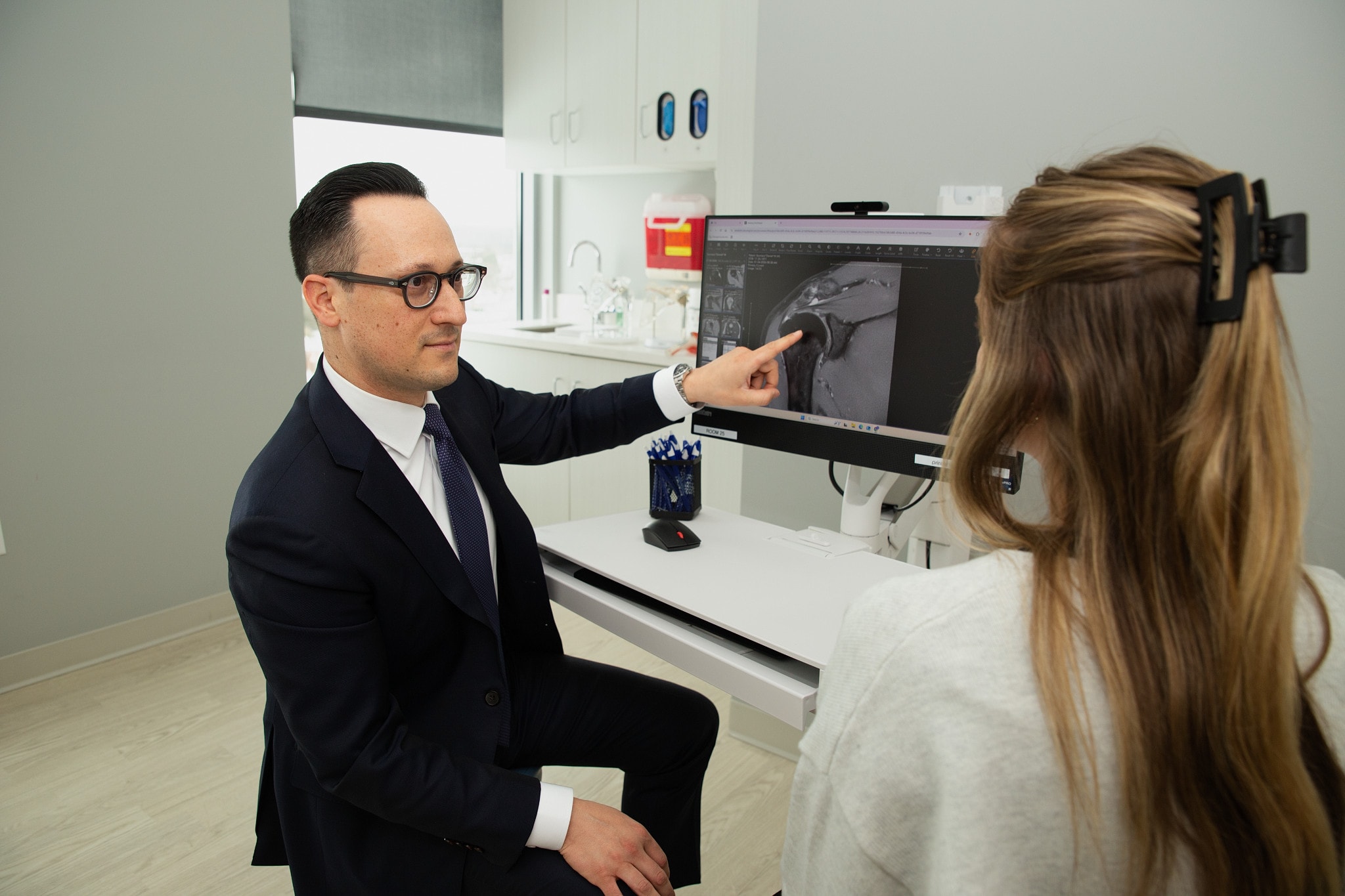
Imaging helps confirm the diagnosis and rule out other causes such as a full thickness rotator cuff tear. X-rays may reveal acromial spurs or calcific deposits, while an MRI can visualize inflammation, tendon thickening, or small tears in the rotator cuff. These modalities also help distinguish between bursitis and tendonitis when both are suspected.
Treatment Options
Treatment typically begins conservatively and includes several approaches tailored to your specific condition.
Conservative Treatment
Initial treatment includes:
- • Rest and activity modification
- • Nonsteroidal anti-inflammatory drugs (NSAIDs)
- • Physical therapy to improve shoulder mechanics and strengthen surrounding muscles
- • Ice or heat application
- • Posture correction
- • Corticosteroid injections into the subacromial space for persistent pain
Surgical Treatment
If symptoms do not improve with nonoperative management, further imaging may be warranted to assess for partial or full-thickness rotator cuff tears, which may require surgical intervention such as bursectomy, debridement, or rotator cuff repair.
Related Information
Learn about subacromial decompression and other surgical options for persistent bursitis and impingement.
Subacromial DecompressionUnderstanding the important role of physical therapy in treating shoulder bursitis and impingement syndrome.
PT ProtocolsQuestions About Shoulder Bursitis or Impingement?
Schedule a consultation with Dr. Kirsch to discuss your diagnosis and treatment options
Contact Us