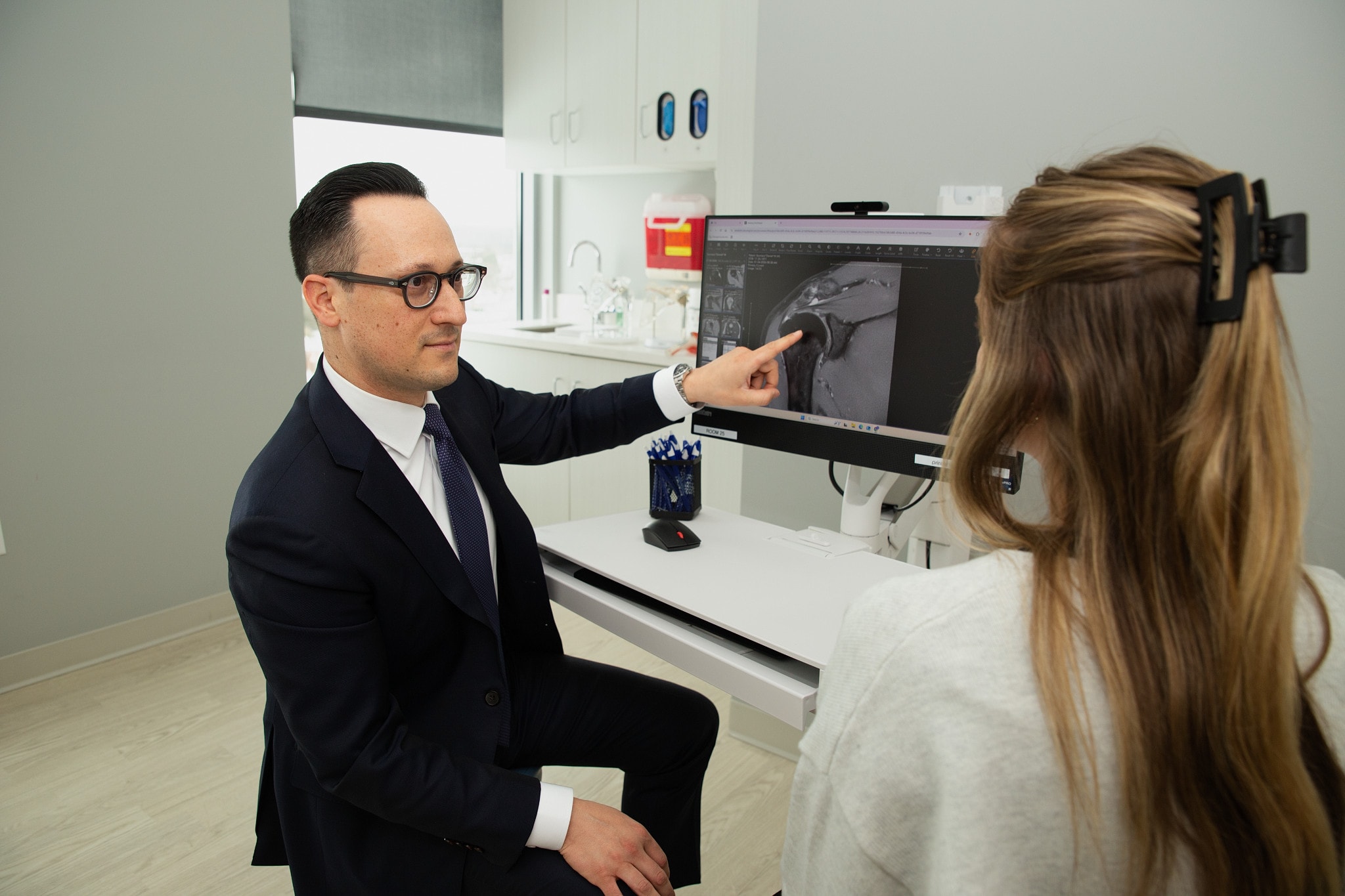
Frozen Shoulder
(Adhesive Capsulitis)
Background
Frozen shoulder, or adhesive capsulitis, is a condition characterized by progressive stiffness and pain in the shoulder joint due to thickening and contraction of the joint capsule. The exact cause is often unknown (idiopathic), but it can also develop after trauma, surgery, or prolonged immobilization.
It is more common in female patients aged 40–60 and is frequently associated with systemic conditions such as diabetes and thyroid disorders. The condition typically progresses through three phases: freezing (painful), frozen (stiffness), and thawing (gradual improvement). While this is a self-limited disease and will eventually resolve, it can sometimes take patients 2-3 years to fully improve. It is essential to recognize a frozen shoulder early so that treatment can effectively shorten the symptomatic period.
Symptoms
Frozen shoulder typically begins with a gradual onset of symptoms:
- • Shoulder pain, particularly with movement
- • Increasing stiffness and restricted range of motion
- • Pain that is often worse at night
- • Sleep disruption and pain at end range of motion
- • Severe limitation in activities such as reaching overhead, behind the back, or lifting objects
As the condition progresses, pain may lessen, but stiffness becomes more prominent. The total course of frozen shoulder can last anywhere from several months to a few years if left untreated.
Three Phases of Frozen Shoulder
Phase 1 - Freezing (Painful): Gradual onset of pain with progressive loss of motion
Phase 2 - Frozen (Stiffness): Pain may decrease, but stiffness becomes severe
Phase 3 - Thawing (Gradual Improvement): Slow return of shoulder motion over time
Diagnosis
Diagnosis of frozen shoulder is clinical, based on a detailed history and physical examination showing a global restriction in both active and passive shoulder range of motion, particularly in external rotation. The loss of motion differentiates it from other causes of shoulder pain like rotator cuff disorders.
An MRI is not needed, although it may show thickening of the joint capsule and synovium but is not routinely required for diagnosis.
Treatment Options
Treatment for frozen shoulder focuses on relieving pain and restoring motion, and most cases improve over time with conservative management.
Conservative Treatment
Early stages benefit from:
- • NSAIDs for pain management
- • Corticosteroid injections
- • Gentle stretching exercises
Important: The key is to try to normalize shoulder motion. Often patients focus on strengthening, which can worsen their symptoms.
Surgical Treatment
In cases where conservative measures fail, surgery can be considered. At the time of surgery, the thickened and inflamed capsule is released arthroscopically. Most patients eventually regain functional range of motion, though some residual stiffness can persist.
Related Information
Understanding the role of gentle stretching and range of motion exercises in treating frozen shoulder.
PT ProtocolsLearn more about what to expect during your treatment journey for frozen shoulder.
Patient ExperienceQuestions About Frozen Shoulder?
Schedule a consultation with Dr. Kirsch to discuss your diagnosis and treatment options
Contact Us