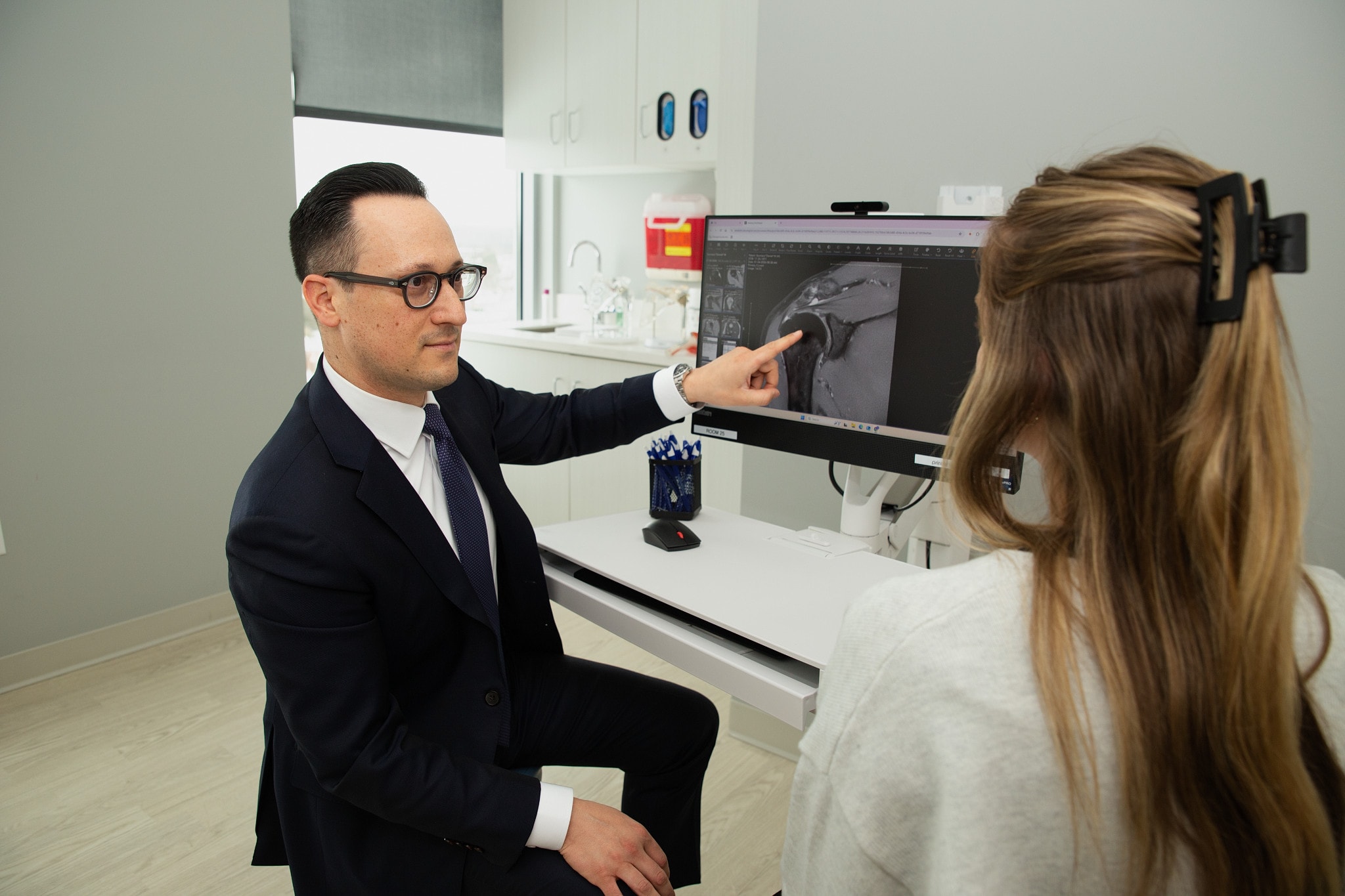
Cuff Tear Arthropathy
Background
Rotator cuff tear arthropathy is a complex shoulder condition that arises from a massive, chronic rotator cuff tear combined with degenerative changes in the glenohumeral joint. Over time, the absence of functional rotator cuff muscles leads to abnormal joint mechanics, superior migration of the humeral head, and progressive cartilage loss.
This condition primarily affects older adults and is often the result of long-standing, untreated rotator cuff tears that cause joint instability and degeneration of the shoulder. Patients develop progressive mechanical dysfunction of the shoulder secondary to a lack of rotator cuff function and then develop arthritic changes as a consequence.
Symptoms
Patients with rotator cuff tear arthropathy typically present with:
- • Chronic shoulder pain
- • Reduced range of motion
- • Significant weakness, particularly in lifting the arm overhead
- • Pseudoparalysis - inability to actively raise the arm despite no true neurological deficit
- • Night pain
- • Difficulty with daily activities (grooming, reaching overhead)
- • Shoulder instability or crepitus with movement
Diagnosis
Diagnosis of rotator cuff tear arthropathy involves a combination of clinical evaluation and imaging studies. Physical examination may reveal limited active range of motion, muscle atrophy, and signs of impingement.
X-rays typically show superior migration of the humeral head, narrowed joint space, and acetabularization of the acromion. An MRI is not necessary when you have these changes on plain radiographs, however, it may be helpful early in the disease process. A CT scan is obtained when surgery is being considered to help guide surgical planning.
Treatment Options
Management of rotator cuff tear arthropathy depends on symptom severity, functional impairment, and patient health status.
Conservative Treatment
Conservative treatments may provide temporary relief in mild cases:
- • Physical therapy
- • Activity modification
- • Anti-inflammatory medications
- • Anterior deltoid strengthening protocol for patients with mild symptoms
Surgical Treatment
Reverse shoulder arthroplasty is the gold standard for advanced cases of rotator cuff tear arthropathy. This innovative procedure relies on the deltoid muscle rather than the rotator cuff to restore shoulder function, providing excellent pain relief and functional improvement for patients with significant pain and dysfunction.
Related Information
Learn about reverse shoulder replacement, the gold standard treatment for rotator cuff tear arthropathy.
Learn MoreQuestions About Cuff Tear Arthropathy?
Schedule a consultation with Dr. Kirsch to discuss your diagnosis and treatment options
Contact Us