Calcific Tendinitis
Background
Calcific tendinitis is a condition characterized by the deposition of calcium crystals within the rotator cuff tendons, most commonly the supraspinatus tendon. The exact cause of calcium deposit formation is not fully understood, but it is believed to result from a cell-mediated process rather than simple degeneration or trauma.
This condition typically affects adults between 30 and 50 years of age and is more common in women. Calcific tendinitis can cause both acute and chronic shoulder pain, and the calcium deposits can vary in size and density. In some cases, the condition may be completely asymptomatic and discovered incidentally on X-rays taken for other reasons.
Symptoms
Symptoms of calcific tendinitis can range from mild to severe and may include:
- • Acute, severe shoulder pain (particularly during the resorptive phase when the body tries to remove the calcium)
- • Chronic, persistent shoulder pain
- • Pain that worsens with overhead activities or reaching
- • Pain at night that disrupts sleep
- • Limited range of motion due to pain
- • Shoulder stiffness
Note: The acute phase, when calcium is being reabsorbed by the body, can cause sudden and intense pain that may be mistaken for other serious shoulder conditions.
Diagnosis
Diagnosis of calcific tendinitis begins with a thorough clinical examination to assess pain patterns, range of motion, and specific tender points. X-rays are the primary diagnostic tool and can clearly visualize calcium deposits within the rotator cuff tendons. The deposits typically appear as cloudy or well-defined white areas on the X-ray.
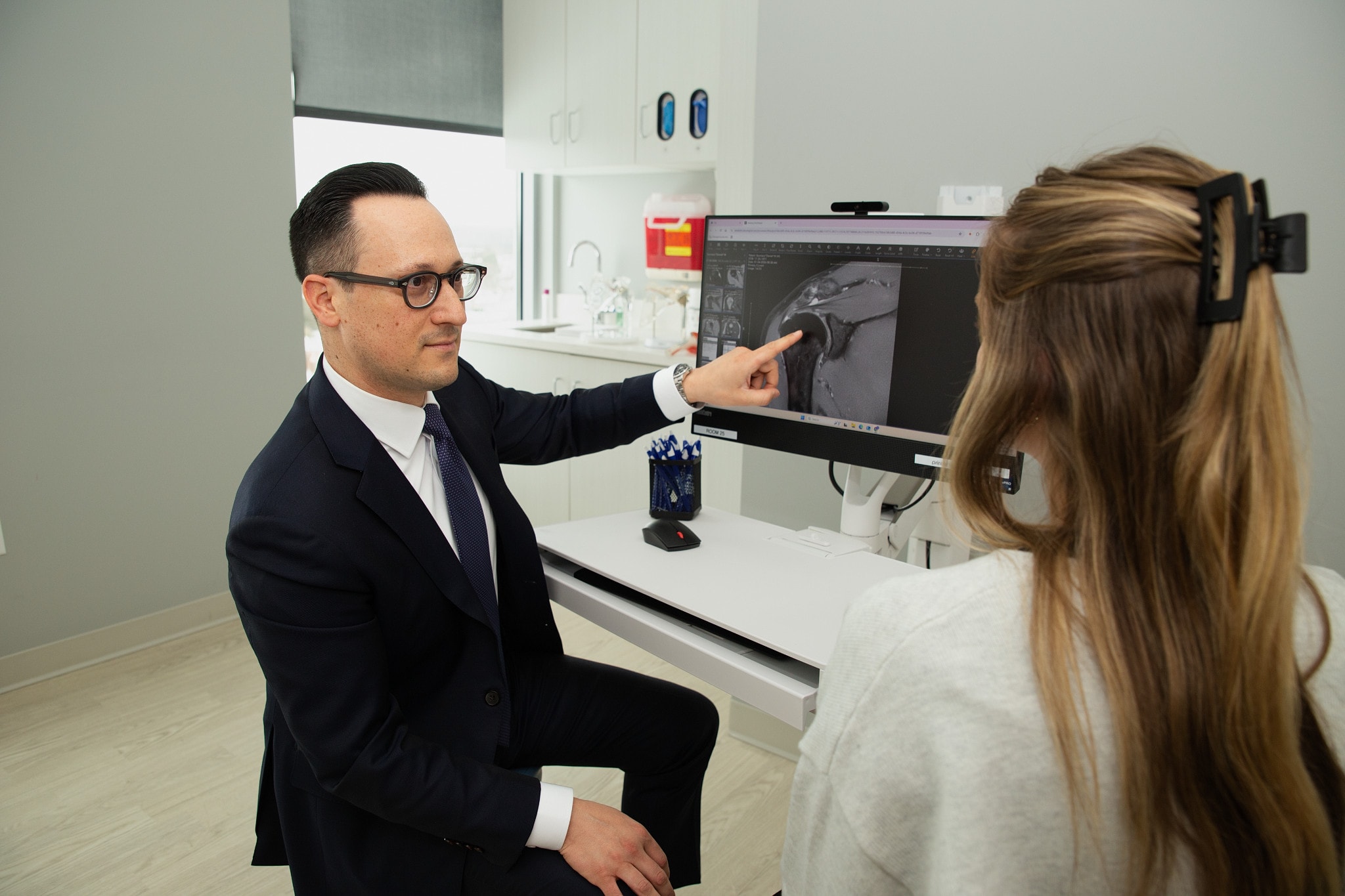
Ultrasound can also be useful for identifying calcium deposits and assessing their consistency. An MRI may be ordered to evaluate the surrounding soft tissues and rule out other shoulder pathology such as rotator cuff tears, though it is less effective at visualizing calcium deposits compared to X-rays.
Treatment Options
Treatment for calcific tendinitis varies depending on the severity of symptoms and the phase of the disease. Many cases resolve spontaneously as the calcium is reabsorbed by the body.
Conservative Treatment
Initial treatment typically includes:
- • Rest and activity modification
- • Nonsteroidal anti-inflammatory drugs (NSAIDs)
- • Physical therapy to maintain range of motion and strengthen the shoulder
- • Ice application to reduce pain and inflammation
- • Corticosteroid injections for severe pain
Minimally Invasive Procedures
For persistent cases, ultrasound-guided needle aspiration or lavage may be performed to break up and remove calcium deposits. This procedure can provide significant pain relief and accelerate recovery.
Surgical Treatment
When conservative treatments fail and symptoms significantly impact quality of life, arthroscopic surgery may be recommended. The procedure involves removing the calcium deposits from the tendon and performing a subacromial decompression if needed. Most patients experience substantial pain relief following surgical removal of the calcium deposits.
Related Information
Learn about arthroscopic removal of calcium deposits and subacromial decompression procedures.
Subacromial DecompressionUnderstanding the role of physical therapy in managing calcific tendinitis and maintaining shoulder function.
PT ProtocolsQuestions About Calcific Tendinitis?
Schedule a consultation with Dr. Kirsch to discuss your diagnosis and treatment options
Contact Us