Biceps Tendonitis & Superior Labral Injury
Background
Biceps tendonitis and injuries to the biceps-labral complex often involve inflammation or degeneration of the long head of the biceps tendon (LHBT) and its attachment to the superior labrum of the glenoid. These conditions are commonly seen in overhead athletes or individuals performing repetitive shoulder activities, leading to overuse and microtrauma.
The biceps-labral complex plays a role in shoulder stability and motion, and injuries such as SLAP (superior labrum anterior to posterior) tears can compromise both function and comfort. These issues may also occur in conjunction with other shoulder pathologies, such as rotator cuff tears or shoulder instability.
Symptoms
Patients with biceps tendonitis or biceps-labral complex injuries typically report:
- • Pain in the front of the shoulder
- • Pain especially with overhead motion or lifting
- • Pain radiating down the front of the arm
- • Worsening with elbow flexion or forearm supination
- • Deep, catching, or clicking sensation within the joint
- • Weakness and reduced athletic performance
- • Possible tendon rupture in chronic cases
Diagnosis
Diagnosis begins with a detailed history and physical exam, including specific tests such as Speed's test, Yergason's test, and O'Brien's test to assess biceps and labral involvement.
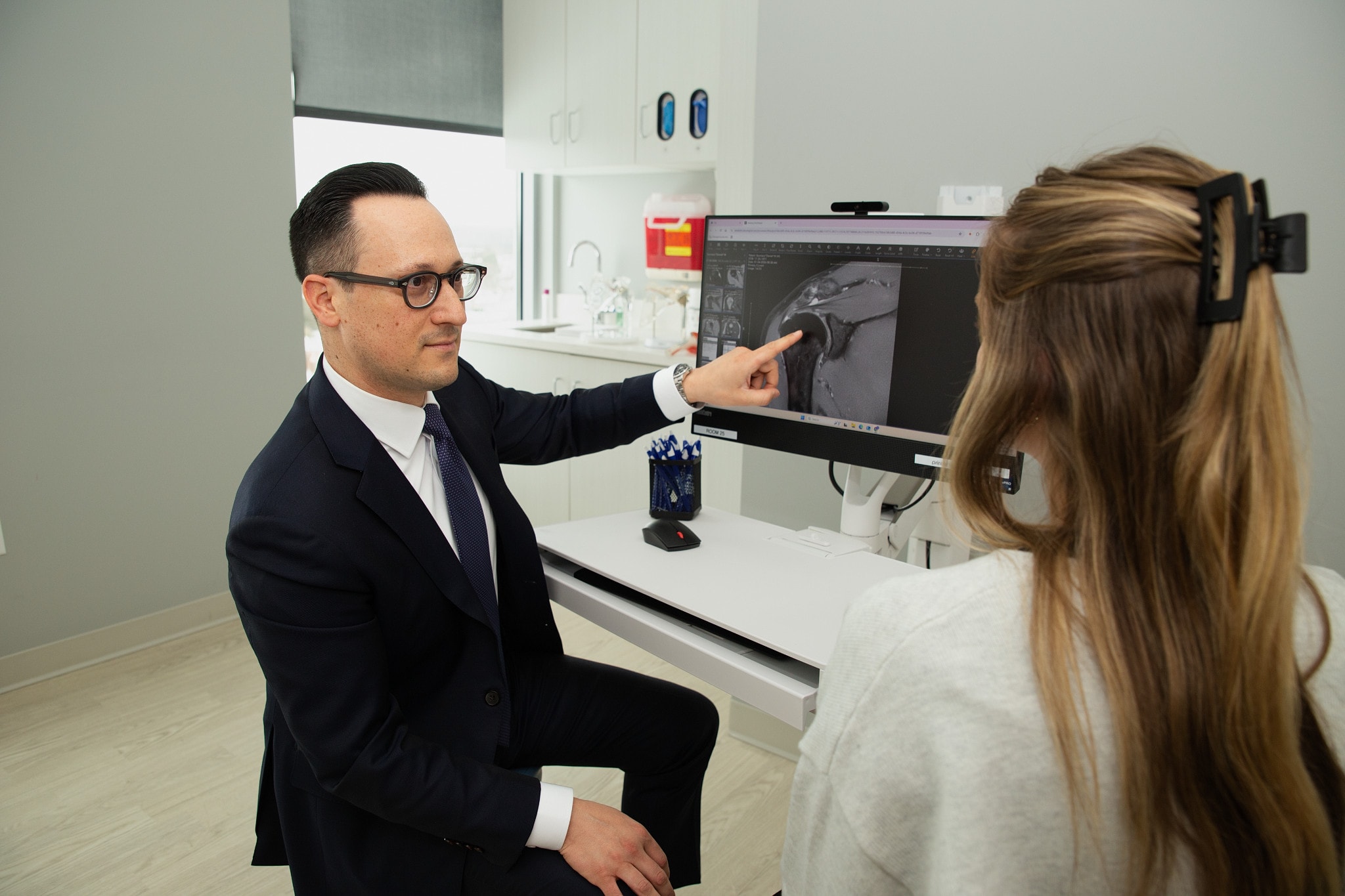
Occasionally a diagnostic injection into the bicipital groove or the glenohumeral joint can be helpful to truly localize the source of symptoms. These injections can be both diagnostic and therapeutic. If symptoms persist despite non-operative care, an MRI can provide supporting evidence of biceps/labral disease and also evaluate for other sources of pain.
Treatment Options
Non-Operative Management
Initial treatment typically includes:
- • Rest and activity modification
- • Physical therapy
- • Anti-inflammatory medications
- • Corticosteroid injections (diagnostic and therapeutic)
Surgical Treatment
When conservative treatment fails, biceps tenodesis is often recommended. This procedure involves releasing the biceps tendon from the labrum and reattaching it to the humerus, providing reliable pain relief while maintaining biceps function. This procedure is particularly effective for biceps tendonitis and SLAP tears.
Related Information
Learn about biceps tenodesis, a surgical procedure to treat biceps tendonitis and SLAP tears.
Learn MoreQuestions About Biceps Tendonitis?
Schedule a consultation with Dr. Kirsch to discuss your diagnosis and treatment options
Contact Us