AC Joint Injury
Background
Acromioclavicular (AC) joint injuries involve damage to the ligaments that stabilize the joint between the acromion (part of the scapula) and the clavicle. These injuries are common in athletes and active individuals, particularly from direct trauma to the shoulder, such as a fall onto the shoulder or a collision in contact sports.
AC joint injuries range from mild sprains to complete dislocations with significant ligament damage and clavicular displacement.
Symptoms
Symptoms of AC joint injuries include:
- • Pain at the top of the shoulder, especially with arm movement or lifting
- • Swelling, bruising, and tenderness over the AC joint
- • Visible bump or deformity due to clavicle displacement (in severe injuries)
- • Limited shoulder motion
- • Sensation of instability or weakness during overhead activities
- • Pain with cross-body movements
Diagnosis
Diagnosis of an AC joint injury begins with a clinical examination, noting tenderness, deformity, and pain with specific movements such as cross-body adduction. X-rays are typically used to evaluate the alignment of the clavicle and acromion and to classify the severity of the injury.
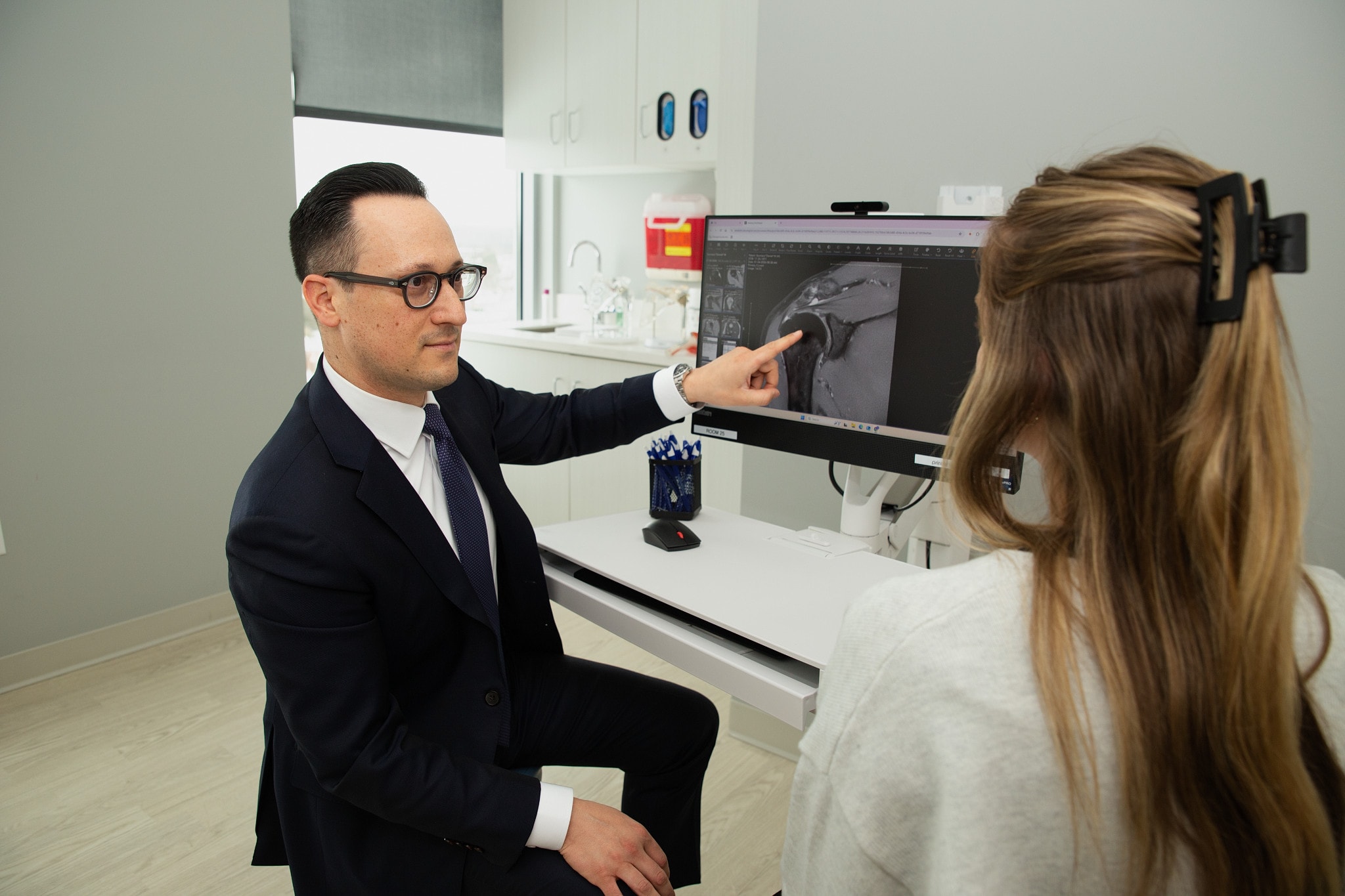
Advanced imaging such as an MRI is often not needed.
Treatment Options
The vast majority of AC joint injuries can be managed non-operatively. Even high-grade (Type V) AC joint injuries can be successfully managed non-operatively in the majority of patients.
Non-Operative Treatment
Non-operative treatment consists of:
- • Rest and ice application
- • NSAIDs for pain management
- • Sling immobilization
- • Physical therapy to restore range of motion and strength
Evidence-Based Approach
70% success rate: Studies in active military cadets have demonstrated that 70% of them with high-grade AC joint injuries can resume active military duty without surgery.
Furthermore, studies have demonstrated that there is no difference in the acute or delayed management of these injuries, so most patients should have a trial of non-operative treatment initially.
Surgical Treatment
If surgery is required, ligament reconstruction with a graft and heavy suture is performed.
Related Information
Learn about AC joint stabilization surgery for cases that do not improve with conservative treatment.
AC Joint StabilizationUnderstanding the role of physical therapy in recovering from AC joint injuries and restoring shoulder function.
PT ProtocolsQuestions About AC Joint Injuries?
Schedule a consultation with Dr. Kirsch to discuss your diagnosis and treatment options
Contact Us